Waterloo Epoxy Flooring installs flake epoxy floors in Waterloo, IA, serving surrounding cities including Evansdale, Cedar Falls, Waverly, Independence, Oelwein. Flake floors are the most popular system we install in garages, and after more than 20 years of coating concrete we know they are also one of the most forgiving, provided the slab under them is ground, tested and repaired first.
A flake floor combines a pigmented base coat, a broadcast of decorative vinyl chips and a clear protective topcoat. The chips hide dust, tire marks and small slab imperfections, add light texture underfoot and come in blends that range from subtle grays to bold, high-contrast mixes.
We help you choose a blend and chip size with sample boards in your own space, then write the product line, the number of coats and the finished thickness into the proposal. That way the finished floor can be checked against exactly what was quoted.
Choosing a Flake Blend
Colors and Blends
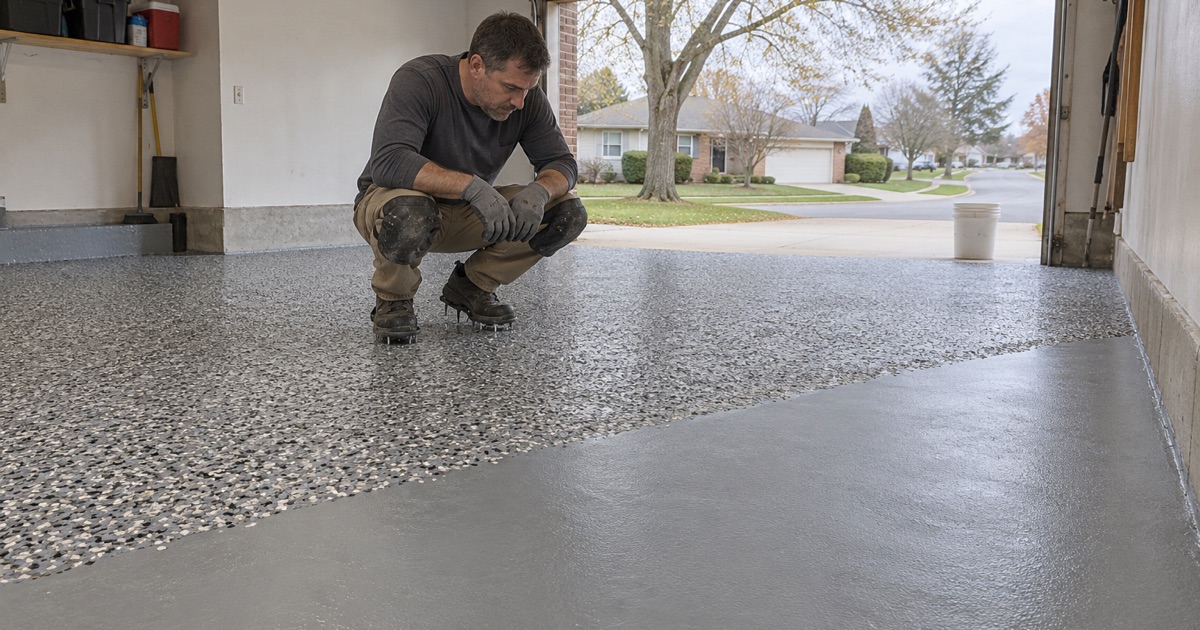
Flake blends mix several colors of vinyl chip to create a speckled, stone-like surface. Neutral grays and tans are popular because they hide dirt and pair well with most garages and shops, while brighter blends can carry a brand color or a personal style.
The base coat color shows through gaps in a partial broadcast and affects how the blend reads. In a full broadcast it is mostly hidden, so the chips do almost all the work.
Chip Size
Smaller chips create a fine, tight speckle that looks like granite from a distance. Larger chips give a bolder, more open pattern and a slightly more textured feel. Some customers mix sizes for depth.
We bring samples of each size to your garage or shop, because lighting and the size of the room change how a chip pattern reads more than a small photo can show.
Full or Partial Broadcast
A full broadcast covers the entire floor with chips, giving the most uniform look, the best concealment of dust and imperfections, and more texture. A partial broadcast scatters chips over a solid base color for a lighter, more modern look that uses less material.
Partial broadcasts show dust and tire marks more readily, so we usually recommend a full broadcast for garages that see daily driving and winter salt. Partial broadcasts suit lighter-use spaces such as a basement office or a showroom corner.
How a Flake Floor Is Installed
Grinding and Repairs
Every flake floor starts with diamond grinding to open the slab and remove old paint, sealers and contamination. Dust is captured at the machine with a vacuum rather than swept or rinsed toward a drain, and we never use acid etching.
Cracks, spalls and pitting are mapped and repaired before coating. Repairs are ground flush so they do not show through the finish, and if a slab section is too damaged to coat, we tell you before the job starts.
Moisture Testing
A moisture test is part of the written scope before the price is final, on garage and basement slabs alike. We use ASTM F2170 relative humidity probes or ASTM F1869 calcium chloride tests, and a reading above the coating’s limit means a moisture-mitigation primer goes into the scope.
Garages are often built without the under-slab vapor retarder required in living spaces, since the model residential code exempts them. That is one reason we test every garage, whatever year the house was built.
Base Coat, Broadcast and Scrape
The base coat, usually a 100% solids epoxy, is rolled out and flake is broadcast into it while it is wet. Once cured, loose and high chips are scraped and vacuumed off, leaving an even layer locked into the base.
Clear Topcoat
A clear topcoat seals the flake and provides the wear surface. We typically use a polyaspartic or polyurea topcoat because it resists ultraviolet light, abrasion and hot tire pickup better than a standard epoxy topcoat.
Topcoat thickness affects both durability and texture. A thinner coat leaves more chip texture for grip; a heavier coat creates a smoother, glossier surface that is easier to clean.
Flake Floors in Garages, Basements and Businesses
Garages Through Iowa Winters
Garage floors here take brine and rock salt on tires from November through March. A flake floor with a chemical-resistant topcoat keeps that salt water on the surface where it can be squeegeed out, rather than soaking into concrete that would scale through freeze-thaw cycles.
Cure schedules also follow the slab temperature and dew point, not the calendar. In an unheated garage during a cold stretch, we will recommend waiting rather than coating a slab too cold to cure.
Basements and Workshops
In basements, flake floors give a durable, easy-to-clean surface for laundry rooms, workshops and gyms. We check the sump pit, the floor drain and the slab for signs of past water first, because a coating does not stop seepage.
For basements and attached garages, we offer low-odor products as a comfort choice during installation and re-entry. They are an option, not something Iowa law requires, and we say so.
Commercial and Shop Floors
Flake systems also work well in auto shops, retail spaces, locker rooms and break rooms, where they hide wear and clean easily. For heavier traffic we build more thickness into the system and add texture where floors get wet.
On commercial jobs we phase the work around business hours, often finishing a section overnight or over a weekend. Flake floors with a fast-curing polyaspartic topcoat can return to light use quickly, which helps when a shop or locker room cannot stay closed for long.
Care and Longevity
Cleaning a Flake Floor
Regular sweeping and occasional mopping with a neutral cleaner keep a flake floor looking good. In winter, squeegeeing or rinsing salt brine off the floor after storms prevents residue from building up and dulling the topcoat.
What the Warranty Leaves Out
We explain warranty exclusions before the job is sold. Moisture vapor transmission and hydrostatic pressure are excluded from nearly every coating warranty, so the moisture test is as much about protecting your investment as it is about choosing the right primer.
- 20+ Years Coating Concrete
- Moisture Test in Every Scope
- Free Written Estimates